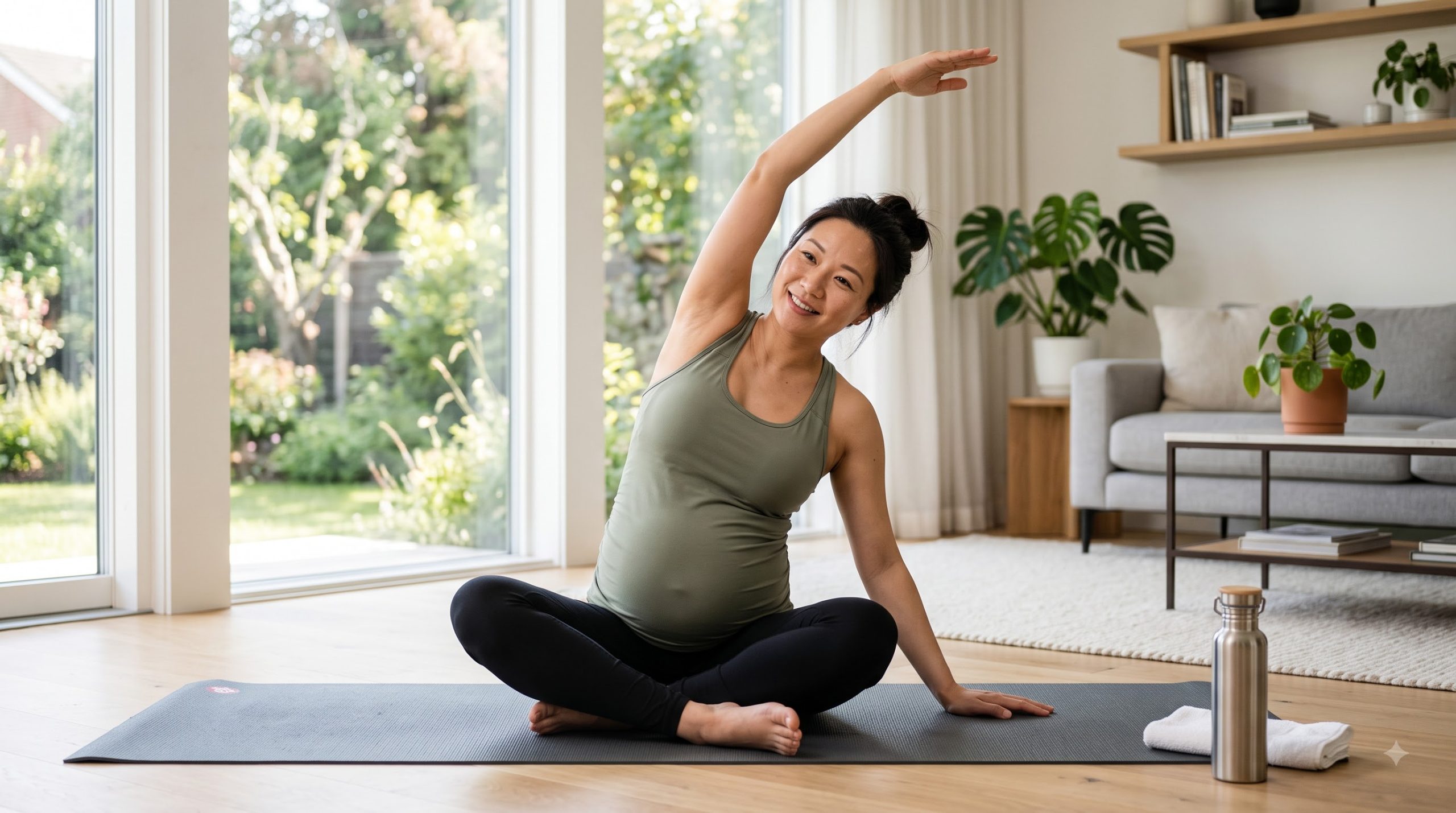
Safe Exercises During Pregnancy: A Beginner’s Guide
For many pregnant people, appropriate physical activity can be a useful part of a healthy routine. The right activity depends on your health, pregnancy, previous fitness level, and advice from your healthcare team.
Start at Your Level
If you were active before pregnancy and have no medical restriction, you may be able to continue familiar activities with adjustments. If you were not active, begin gently and increase gradually.
A practical approach is to keep this part of your routine simple and repeatable. Your circumstances may differ from another family’s, so use the basic principle as a starting point and adapt it to your healthcare team’s advice, your baby’s needs, and your home situation.
Walking
Walking is simple to scale up or down. A comfortable pace, supportive footwear, water, and realistic goals can make it sustainable.
A practical approach is to keep this part of your routine simple and repeatable. Your circumstances may differ from another family’s, so use the basic principle as a starting point and adapt it to your healthcare team’s advice, your baby’s needs, and your home situation.
Strength
Light to moderate strength exercises can help maintain functional strength. Bodyweight movements, resistance bands, and appropriately selected weights may be suitable for some people. Focus on controlled movement and comfortable breathing.
A practical approach is to keep this part of your routine simple and repeatable. Your circumstances may differ from another family’s, so use the basic principle as a starting point and adapt it to your healthcare team’s advice, your baby’s needs, and your home situation.
Mobility and Low Impact
Gentle mobility work, swimming, water exercise, and stationary cycling may be comfortable options for some pregnant people. Balance and joint stability can change as pregnancy progresses.
A practical approach is to keep this part of your routine simple and repeatable. Your circumstances may differ from another family’s, so use the basic principle as a starting point and adapt it to your healthcare team’s advice, your baby’s needs, and your home situation.
Hydration and Heat
Drink regularly and avoid exercising in conditions that make you uncomfortably hot. Take breaks and adjust intensity when energy levels change.
A practical approach is to keep this part of your routine simple and repeatable. Your circumstances may differ from another family’s, so use the basic principle as a starting point and adapt it to your healthcare team’s advice, your baby’s needs, and your home situation.
When to Stop
Stop exercise and contact your healthcare team for concerning symptoms such as vaginal bleeding, fluid leakage, chest pain, severe dizziness, significant shortness of breath, painful contractions, or other warning signs you have been given.
A practical approach is to keep this part of your routine simple and repeatable. Your circumstances may differ from another family’s, so use the basic principle as a starting point and adapt it to your healthcare team’s advice, your baby’s needs, and your home situation.
Make It Sustainable
Pregnancy exercise is about wellbeing rather than performance. A short walk or gentle session that you can repeat is often more useful than an exhausting workout.
A practical approach is to keep this part of your routine simple and repeatable. Your circumstances may differ from another family’s, so use the basic principle as a starting point and adapt it to your healthcare team’s advice, your baby’s needs, and your home situation.
Simple Tips That Make Everyday Life Easier
New parents often benefit from preparing small systems rather than trying to remember everything. Keep frequently used supplies together, write down questions for appointments, and ask for help when a task feels unnecessarily difficult. A simple routine can reduce mental load during a period when sleep and energy may be unpredictable.
It is also useful to distinguish between information that is reassuring and information that requires action. Parenting advice online can be contradictory. For medical or safety questions, prioritize your baby’s healthcare professional, your maternity team, the product manufacturer’s instructions, and established public-health guidance.
When to Contact a Healthcare Professional
General advice cannot account for every pregnancy, birth, baby, or family situation. Contact a qualified healthcare professional when symptoms are persistent, severe, unusual for you or your baby, or when you have been specifically told to monitor something. If you believe there is an emergency, use your local emergency medical service rather than waiting for an online answer.
FAQ
Can I exercise if I was not active before pregnancy?
Many people can begin gentle activity, but start gradually and ask your healthcare professional if you have concerns.
Should exercise feel exhausting?
No. Choose an intensity appropriate for your health and fitness level.
Can I continue my usual workouts?
Some activities can be modified, but individual advice matters, especially for high-impact or high-risk sports.
Internal Link Suggestions
Consider linking this article to relevant TinySteps guides about pregnancy, newborn feeding, newborn sleep, newborn care, hospital preparation, and postpartum recovery. Replace the example links with your live TinySteps URLs before publishing.
Image Prompt
Photorealistic premium parenting magazine photograph of pregnant woman doing gentle low-impact exercise on a yoga mat at home, Vietnamese or Asian family, realistic natural expressions and proportions, warm natural daylight, modern clean home or professional setting, cream and beige neutral palette, authentic lifestyle editorial photography, trustworthy parenting website aesthetic, subtle depth of field, clean composition, no text, no logo, no watermark, 16:9 horizontal, 1600×900.
Alt Text
Pregnant woman doing gentle low-impact exercise on a yoga mat at home.
Medical Disclaimer
This article is for general educational purposes only and is not medical advice. Pregnancy, newborn care, postpartum recovery, and safety recommendations can vary by individual circumstances and location. Follow the advice of your qualified healthcare professional and current local guidance.