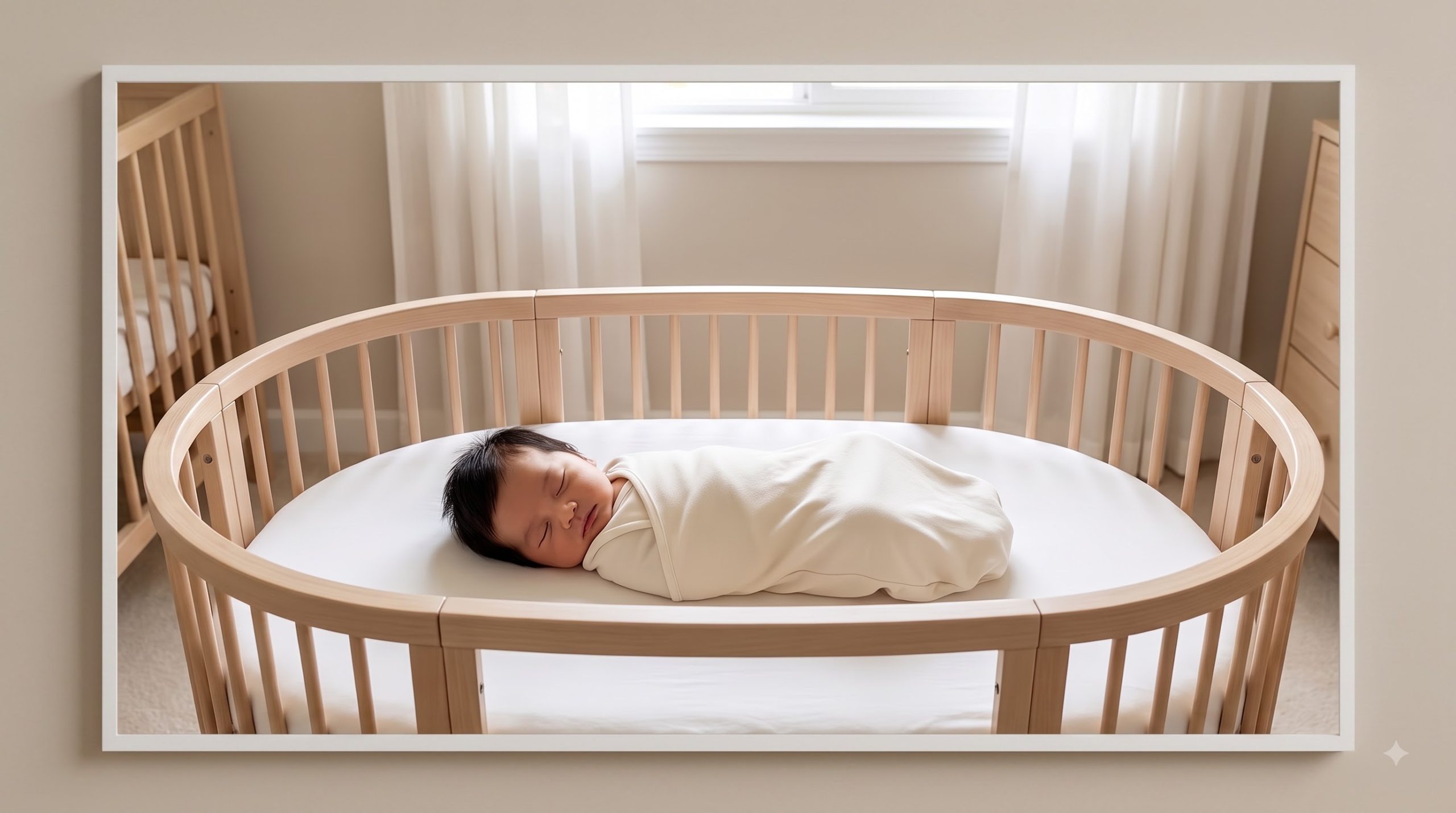
Newborn Sleep Safety: How to Create a Safe Sleep Environment
Introduction
Newborns spend much of their day asleep, so creating a safe sleep environment is one of the most important things new parents can do. Safe sleep recommendations focus on reducing hazards such as suffocation, entrapment, overheating, and accidental sleep-related death.
The basic principles are simple: place babies on their backs for sleep, use a firm and flat sleep surface, keep the sleep area clear, and avoid exposing the baby to smoke. Parents can create a cozy nursery without filling the crib with products that may increase risk.
Always Place Baby on the Back
Place your baby on their back for every sleep, including naps and nighttime sleep. Side or stomach sleeping can increase risk and should not be used as a routine sleep position.
Babies who can eventually roll may move themselves during sleep. Once a baby can roll independently in both directions, parents generally continue placing the baby on the back at the start of sleep while allowing the baby to find their own position.
If your baby has a medical condition that requires a different plan, follow specific instructions from your pediatrician.
Use a Firm, Flat Sleep Surface
A crib, bassinet, or other approved infant sleep product should have a firm, flat mattress that fits correctly. Use a fitted sheet designed for that mattress.
Avoid sofas, adult beds, recliners, couches, pillows, loose blankets, sleep positioners, and other surfaces not designed for infant sleep. Even if a surface looks comfortable, softness and gaps can create serious hazards.
Inspect second-hand equipment carefully. Check whether the product has been recalled, whether parts are missing, and whether it meets current safety requirements.
Keep the Sleep Area Clear
A newborn does not need pillows, stuffed animals, crib bumpers, quilts, or loose blankets in the sleep space. These objects can cover the face or create entrapment hazards.
If additional warmth is needed, use appropriately sized infant sleep clothing or a safe wearable blanket according to current guidance. Avoid weighted sleep products for infants.
Keep cords, strings, toys, and other objects away from the baby’s sleep area.
Room Sharing and Bed Sharing
Many pediatric organizations recommend room sharing without bed sharing during early infancy. Keeping the baby’s crib or bassinet near the parents’ bed makes nighttime feeding and monitoring easier while maintaining a separate sleep surface.
Bed sharing can be particularly hazardous when an adult is very tired, has used alcohol or sedating medication, or when the baby is very young. If you bring your baby into bed for feeding or comfort, return the baby to their own sleep space before you fall asleep whenever possible.
Swaddling and Overheating
Some newborns settle more easily when swaddled. If you choose to swaddle, use a lightweight material, keep the baby’s face uncovered, avoid overheating, and place the baby on the back.
Stop swaddling when the baby shows signs of attempting to roll. Do not use weighted swaddles or other products that restrict movement unless specifically recommended by a qualified healthcare professional.
A smoke-free environment is also important. Keep cigarettes, vaping products, smoke, and other harmful airborne exposures away from the baby.
Car Seats and Sleep
Car seats are designed to protect babies during transportation, not to serve as routine sleeping spaces. If a baby falls asleep while traveling, follow the car-seat manufacturer’s instructions and move the baby to an appropriate sleep surface when it is safe and practical to do so.
Never leave a baby unattended in a vehicle, and never place a car seat on a bed, sofa, counter, or other elevated surface where it can tip.
FAQ
Should newborns sleep on their backs? Yes, place babies on their backs for every sleep unless a healthcare professional has given different medical instructions.
Can a newborn sleep with a pillow? No. Keep pillows and other soft objects out of the sleep space.
Can I use a loose blanket? A clear sleep space is safer; use appropriate sleep clothing instead.
Should the baby sleep in the parents’ bed? A separate infant sleep surface is generally recommended.
Can a newborn sleep in a car seat? Car seats are for travel and should not be used as routine sleep spaces.
Related TinySteps articles: Baby’s First Month · Baby Car Seat Guide · Newborn Feeding Schedule