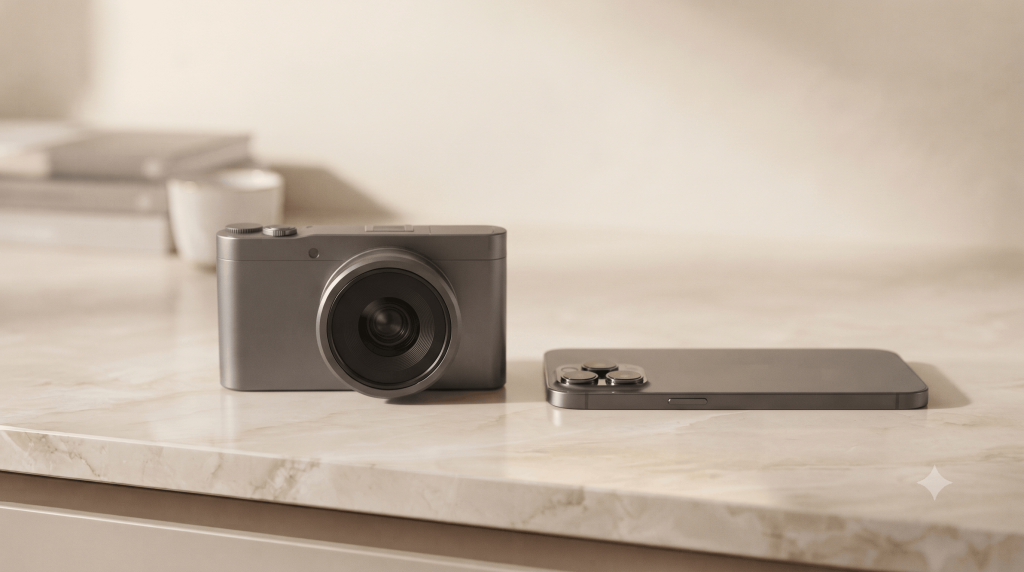
Flagship phone cameras have narrowed the gap with dedicated cameras significantly over the past few years, thanks largely to computational photography. Here’s an honest look at where a dedicated camera still earns its place in 2026, and where it doesn’t.
Where phones have mostly caught up
In good, even daylight, the difference between flagship phone photos and a 1-inch sensor compact camera is small enough that most people won’t reliably tell them apart in casual viewing. Computational photography has closed this gap dramatically over the past several phone camera generations.
Where a dedicated camera still wins clearly
Optical zoom is the most obvious gap — even phones with periscope telephoto lenses can’t match a dedicated camera’s zoom range and image quality at longer focal lengths without relying on digital cropping that reduces detail. Shallow depth-of-field background blur from a genuinely larger sensor and lens combination also looks more natural than a phone’s computationally simulated version, particularly around hair and fine edges.
Manual control and shooting consistency
For anyone shooting a lot of photos in a single session — an event, a trip — a dedicated camera’s physical dials for manual exposure control allow faster, more consistent adjustments than reaching into a phone’s camera app settings repeatedly.
Where phones still win
Convenience is the phone’s biggest advantage — it’s always in your pocket, and computational features like night mode processing and instant sharing to social media remain faster and, in low light specifically, sometimes better than a compact camera’s smaller sensor can achieve without a tripod.
Who should still buy a dedicated camera
If you regularly shoot at longer zoom ranges, want more natural background blur, or shoot enough volume in single sessions that manual dial control saves real time, a dedicated compact camera remains a worthwhile purchase in 2026. For casual, everyday photography, a recent flagship phone now covers most needs convincingly.
Frequently asked questions
Is a 1-inch sensor camera still meaningfully better than a phone in low light?
In truly dark scenes without a tripod, computational night modes on flagship phones can actually outperform a handheld compact camera, since phones combine multiple frames aggressively. With a tripod or in moderate low light, the compact camera’s larger sensor generally pulls ahead.