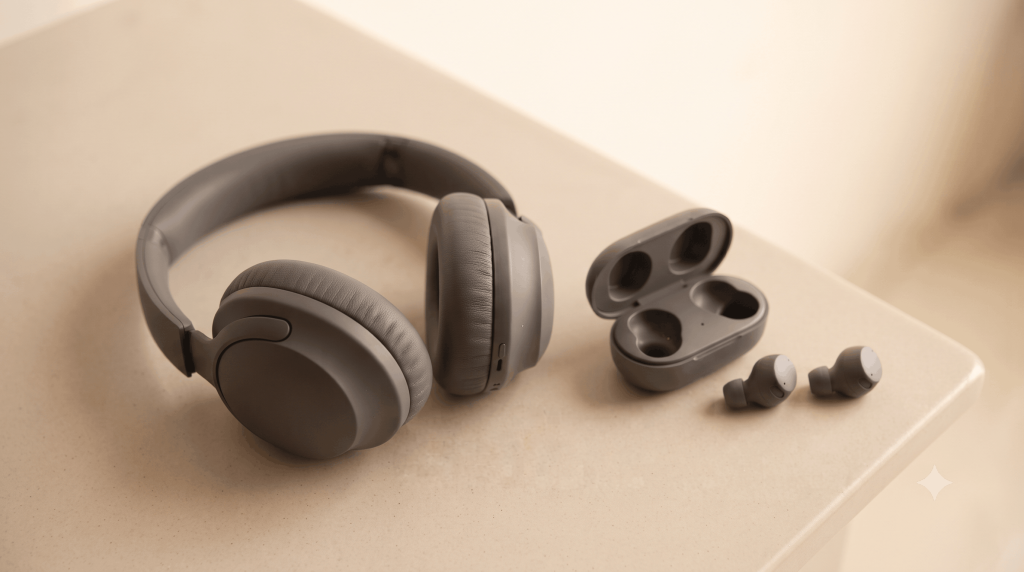
Over-ear and in-ear headphones aren’t just different sizes of the same product — they make genuinely different trade-offs that suit different situations. Here’s how those trade-offs break down.
Sound quality: larger drivers, more headroom
Over-ear headphones generally have more physical space for larger drivers and better acoustic engineering, which tends to translate into more detailed sound and deeper, more controlled bass compared to similarly priced in-ear options. This gap narrows at higher price points but rarely disappears entirely.
Comfort for long sessions
Well-designed over-ear headphones distribute clamping pressure across a larger surface area, often making them more comfortable for multi-hour listening sessions than in-ear designs, which rely entirely on ear canal contact. This varies significantly by individual ear shape and headphone fit, though, so comfort claims are worth verifying in person when possible.
Portability and everyday convenience
In-ear designs, especially true wireless earbuds, are dramatically more portable and practical for commuting, exercise, and quick errands where carrying a full-size headphone case isn’t practical. This convenience is the primary reason in-ear options have become the default choice for daily portable use.
Noise cancelling performance
Over-ear headphones with a full ear cup provide passive noise isolation in addition to active noise cancelling, often resulting in stronger overall noise reduction than in-ear designs relying on active cancelling alone — though a well-sealed set of in-ear buds can come close.
Which one should you buy?
Choose over-ear headphones if sound quality and comfort during long stationary listening sessions (at a desk, on a long flight) are your priority. Choose in-ear earbuds if portability, exercise compatibility, and all-day carrying convenience matter more than squeezing out the last bit of audio fidelity.
Frequently asked questions
Can true wireless earbuds match over-ear headphone sound quality?
At premium price points, the gap has narrowed considerably, but physical space constraints still generally give over-ear designs an edge in bass depth and overall detail at equivalent price tiers.