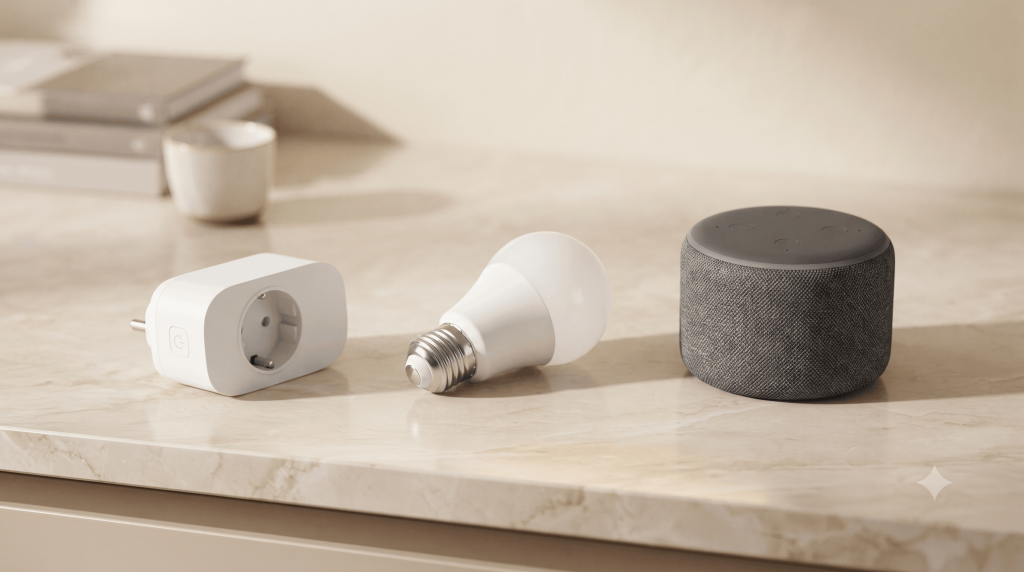
The most common mistake when starting a smart home is buying too much, too fast, and ending up with devices from several different apps that don’t talk to each other. Here’s a more deliberate approach that keeps costs down and avoids compatibility headaches.
Step 1: Pick your ecosystem first
Before buying any devices, decide which voice assistant and app ecosystem you’ll standardize on. This single decision affects every purchase that follows and is far easier to settle upfront than to migrate away from later once you own a dozen devices tied to one platform.
Step 2: Start with a hub-capable smart speaker
A smart speaker that also functions as a smart home hub, as discussed in our smart speaker buying guide, gives you voice control and a hub for other devices in a single purchase, rather than buying a separate bridge device later.
Step 3: Smart lighting is the best value entry point
Smart bulbs and plugs offer the most noticeable day-to-day convenience improvement per dollar spent, and starter kits with 2-4 bulbs are widely available at a lower per-bulb cost than buying individually.
Step 4: Add a smart display only if you have a genuine daily use case
As discussed in our guide on whether smart displays are worth it, they earn their cost when placed somewhere with a clear daily routine (a kitchen for timers and calendars) rather than purely for the novelty of a screen.
Step 5: Save security devices for last — and budget more for them
Video doorbells, cameras, and smart locks are the most expensive category and the most consequential if you cheap out — a laggy or unreliable smart lock is a genuine daily frustration in a way a slow smart bulb response isn’t. Research these specifically rather than buying a bundle sight unseen.
Common budget mistakes to avoid
- Buying devices across incompatible ecosystems before checking they work together
- Starting with expensive security devices before confirming the basics (WiFi coverage, app reliability) work well in your home
- Overlooking ongoing costs — some smart cameras and video doorbells require a paid subscription for cloud video storage
Frequently asked questions
Do I need a dedicated smart home hub, or is a smart speaker enough?
For most home setups, a hub-capable smart speaker is sufficient and avoids the cost of a separate hub device. Larger installations with many devices on different protocols may eventually benefit from a dedicated hub.
How much does a basic smart home setup cost to start?
A smart speaker/hub plus a starter lighting kit typically costs $80-150, a reasonable entry point before deciding whether to expand further.